The First-Born of The Irish Saints
St. Ciarán of Saighir – 18th March
St. Ciarán was born in 5th Century Ireland in the kingdom of Ossory and as many of the early saints, he was related to royalty. His father was from Ossory and his mother was from Cork. Saint Ciarán’s birth was foretold in a prophetic dream to his mother, Liadán, in which a star fell into her mouth. The seers of the time understood this as a sign that she would give birth to a son whose fame would spread far and wide. He was born on Cape Clear Island, a remote and fitting birthplace for a saint destined for the wilderness.
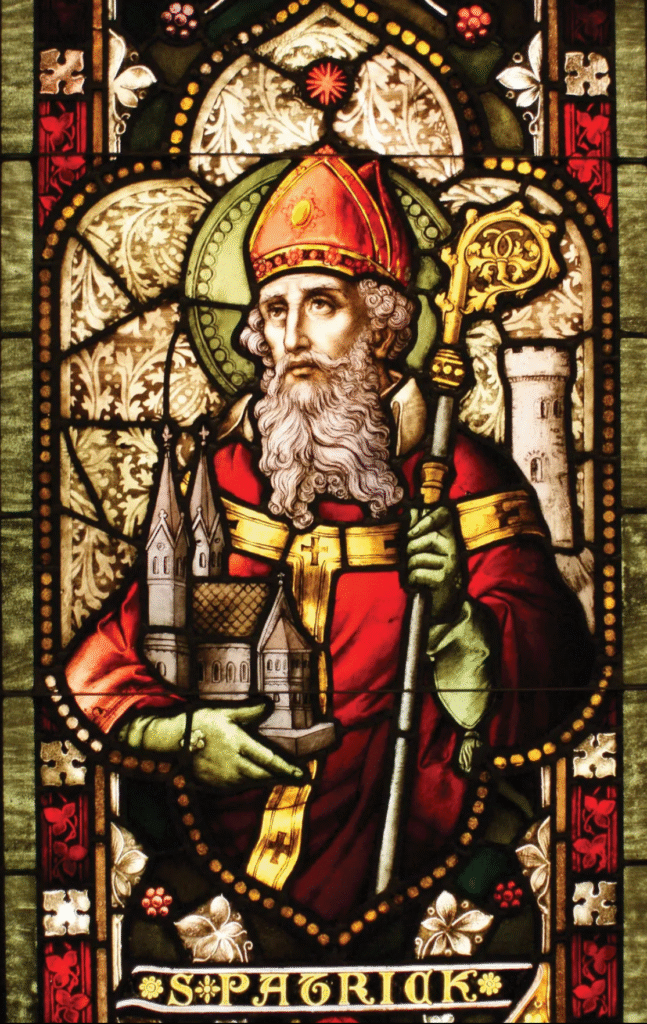
Ciarán’s spiritual path began early. He was already a Christian upon the arrival of Saint Patrick and he quickly moved to help the Enlightener of Ireland in his mission. Before this he was most likely a student of St. Finnian of Clonard before heading to Continental Europe to study in Gaul and Rome. He was ordained a priest while in Europe and upon his return to Ireland he was consecrated Bishop of Ossory by St. Patrick.
The Hermit of Saighir and His Animal Disciples
Evenutally, he needed to move away from large population centers to focus on union with God through prayer and asceticism. Before he set off for the wilderness, St. Patrick gave him a bell and told him it would only ring when he reached the place where God willed him to find a spiritual home.
When the bell rang he found himself in a place called Saighir. There he built a humble cell in the woods of Upper Ossory, near the Slieve Bloom Mountains. It was here that he began his life as a hermit, clad in the skins of animals, living as a New Testament John the Baptist. He subsisted off of herbs he found in the wild and a small amount of barley bread.
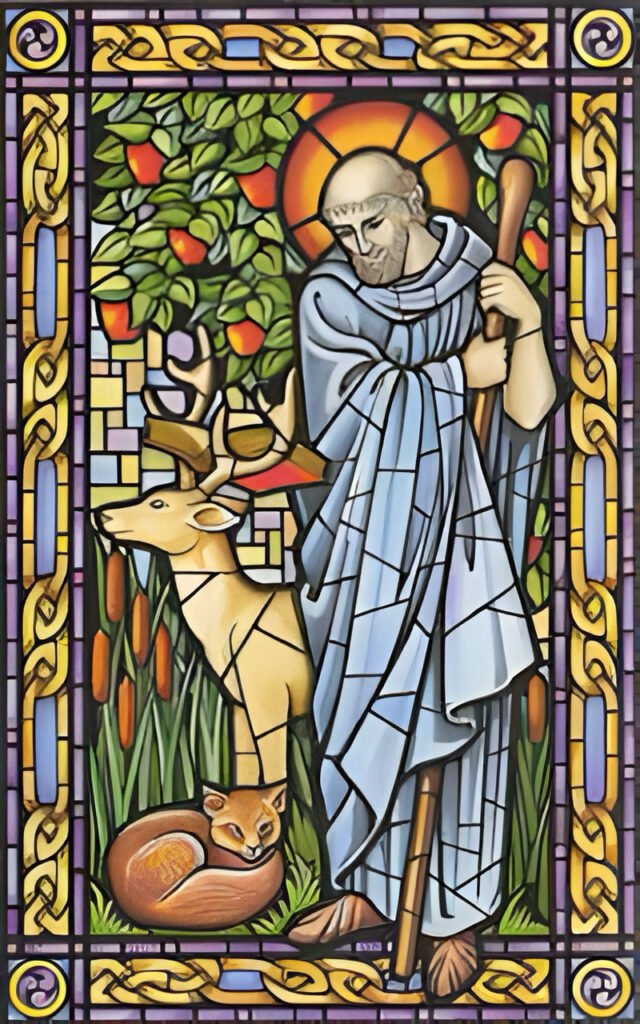
In a charming and beautiful testament to his holiness, the earliest accounts tell of the first beings to seek him out were not men, but the wild animals of the forest. A fox, a badger, and a wolf worked alongside him and his first monks, showing God’s dominion over all creation and the natural peace and order of that creation being restored through a holy man. The animals would help with carrying wood, building cells and other chores.
In this place he practiced extreme asceticism akin to that of the desert father’s, sleeping on the ground, eating little, practicing unceasing prayer, abstinence and showing inspiring levels of humilty and love to all those who came to him. He conversed with the angels and battled the devil in an extraordinary life of holiness and righteousness.
It was around this humble cell that a great monastery eventually grew, attracting many disciples. This monastery became a vital center for the preaching of the Gospel and a renowned industrial community. This legacy continued through the centuries, even serving as the sacred burial place for the Kings of Osraige. Saint Ciarán’s mother, Saint Liadán, also joined this community with other devout women, dedicating their lives to the service of God and the monastery.
Miracles, Prophecies, and a Hallowed Legacy
Saint Ciarán’s life is filled with accounts of divine intervention. Even as a child, he showed his compassion for God’s creation, miraculously saving a little bird that a hawk had seized. Upon seeing the little bird stolen from it’s nest, the child saint prayed to God to save the bird and the hawk dropped to his feet and left the little bird with him. The little bird was very weak and looked as if it would die. So, the child prayed over the little bird and it was restored to health.
Other stories tell of a blessed well that tasted of wine and honey, a foretelling of the sanctity of other saints, and a charming tale of a fox who stole his shoes but was brought to repentance by a badger and a wolf. The foxes repentance included a penance of fasting given by St. Ciarán and once his penance ended he was allowed to live in the monastery again.
The nurse who cared from him in his childhood was an abbess at a far away convent and every Christmas St. Ciarán would appear to her with the Holy Gifts and commune her before returning to the festivities at his monastery. It would have been impossible for him to do this as the distance was so far. It is believed that like the Propher Habakuk, he was carried by angels to the Abbess and then brought back to his monastery.
Wolves, deer and other animals from the wilderness would come to him, especially when they were sick or injured and he would heal them.
Many other miracles about: One time the monastery was very cold inside and the brethern were suffering for this and after a prayer to God a fireball descended on the refectory where they were gathered and lit a large fire and everyone felt it’s warmth. Another time, as St. Patrick visited the monastery with some nobles, there was not enough food to feed them and again, after an entreaty to God for help, the food supplies miraculously multiplied.
He spent the rest of his life as Bishop of Ossory and Abbot of Saighir. He ministered to the people, worked hard, fasted even harder, led people to God, loved his neighbour, preached the gospel, shwoed the power of God through his miracles and never let his island-wide fame affect him as he only cared for serving others.
Before his death he said a time would come when the faith in Ireland would be distorted and the monastaries destroyed. This has happened. In modern Ireland, the faith has been distorted through centuries of war, invasion, reformation, papacy and social changes and the monasteries, for the most part, lie in ruins or have been taken over by papists.
The ruins of his monastery remain to this day, along with another monastic site near Errill and the ancient hermitage on Cape Clear Island. These physical reminders anchor us to a past where our faith flourished in the West, carried by the hands of saints like Ciarán. His legacy endures, not only in these sacred places but also in the hearts of Orthodox Christians.