St. Cera of Kilkeary: A Seventh-Century Irish Abbess and Monastic Founder
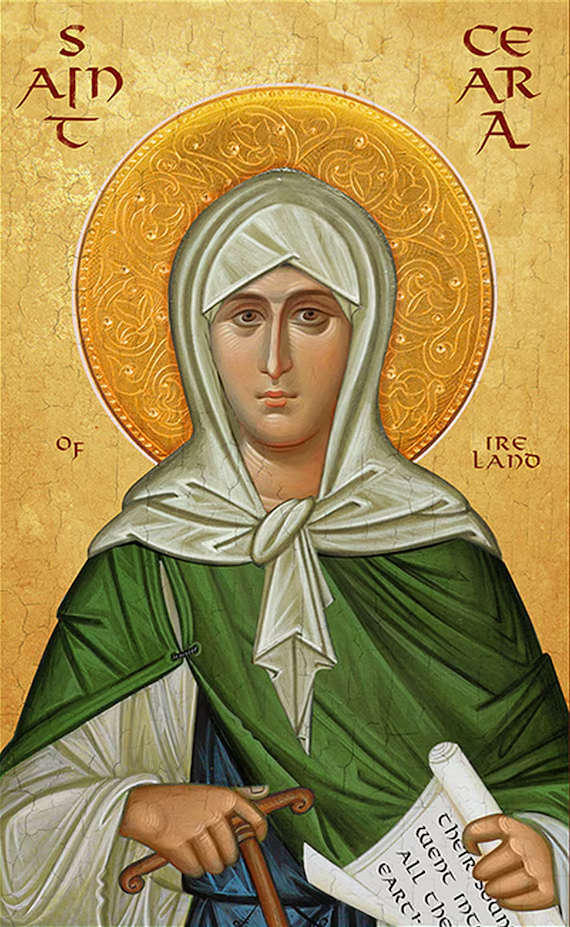
Saint Cera of Kilkeary also known by as Chera, Chier, Ciara, Cyra, Keira, Kiara, Cier, and Ciar is a significant yet historically obscured figure in seventh-century Irish monastic Christianity. Born into the royal lineage of Irish kings and driven by extraordinary spiritual devotion, she founded religious communities that served as centres of learning, prayer, and charitable ministry throughout her era and beyond.
Origins and Noble Lineage
Saint Cera was born in the seventh century in the region of Muscraidhe Thire (also written Muscraighe Tíre), comprising what is now Upper and Lower Ormond in County Tipperary. She descended from the royal line of the Kings of Ireland through her father, Duibhre (also spelled Duibhrea or Duina), who held descent from the Connors, one of Ireland’s most distinguished royal dynasties.
The significance of her noble ancestry cannot be overstated. In seventh-century Ireland, a saint born to royal blood possessed inherent social authority that facilitated the establishment of monasteries, attracted high-quality followers (often women of equal or similar social standing), and secured land grants from powerful secular rulers. Saint Cera’s royal connection proved instrumental in her ability to found multiple religious communities and govern them with the authority necessary to maintain monastic discipline.
Early Sanctity and Reputation for Miracles
As Saint Cera matured, her reputation for sanctity and spiritual power became increasingly widespread throughout Muscraidhe Thire. The medieval hagiographic tradition preserved in the works of Colgan and other hagiographers records a miracle attributed to her intercession, demonstrating her spiritual authority in the eyes of her contemporaries.
According to this tradition, a devastating and foul-smelling fire broke out in Muscraig, in Momonia (a district in Munster). The conflagration presented an existential threat to the local population, who sought divine intervention through the intervention of Saint Brendan of Clonfert, one of the greatest Irish monastic founders of his generation. Saint Brendan, recognising the spiritual power within Saint Cera, instructed the afflicted inhabitants to seek her prayers and intercession. Saint Cera, responding to their supplication with characteristic devotion, prayed for divine intervention.
The result was dramatic and unmistakable: the noxious fire disappeared entirely, its foul stench dissipating as swiftly as its flames extinguished. This miracle established Saint Cera’s reputation as a woman of extraordinary spiritual power and divine favour, attracting increasing numbers of women seeking to share her monastic life and benefit from her spiritual guidance.
Foundation of Kilkeary: The Primary Monastic Establishment
She founded a nunnery that subsequently took the name Cill Ceire (the Church or Cell of Ceire), now known as Kilkeary, situated approximately five kilometres southeast of Nenagh in Upper Ormond, County Tipperary.
The surrounding land functioned as a burial ground for the local clan, a distinction that underscored the monastery’s spiritual centrality to the wider community. In practical terms, the nunnery served multiple functions simultaneously: it was a place of prayer and spiritual discipline for its own community, a pilgrimage destination for the faithful seeking intercession and healing, a centre of learning and manuscript production where religious texts were copied, and an institution of charitable care for women without family security or economic means.
Monastic Expansion: The Foundation of Tehelly
As Saint Cera’s reputation grew and her first community flourished, the number of women seeking to join her religious mission continued to increase. The steady growth in followers necessitated the establishment of a second religious house to accommodate the expanding movement. Accordingly, Saint Cera resolved to found another monastery, directing her course toward Heli.
At this location, Saint Cera is said to have obtained land and established a second nunnery called Tech-Telle (later Anglicized as Tehelly) with the assistance of Saint Fintan Munnu, a prominent abbot whose spiritual authority. According to some accounts, Saint Fintan had previously resided at this location himself before assigning it to Saint Cera’s care.
Third Monastery at Killchree (Kilcrea)
Saint Cera also founded or governed a third monastic establishment known as Killchree, located in what is now County Cork, several kilometres southwest of the city of Cork. Tradition holds that this monastery, like Kilkeary, took its name directly from the saint: Cill Chré meaning “the Cell of Cera.”
Monastic Leadership
Saint Cera’s leadership style, emphasized sanctity, prudence, and compassionate governance. Her communities flourished under her direction, attracting both dedicated religious women and pilgrims seeking spiritual counsel and intercession. The fact that she established multiple monasteries sequentially rather than delegating the founding of subsequent communities to disciples suggests that she retained direct oversight of each establishment, at least during their foundational phases.
Veneration and Feast Day Observance
Saint Cera died on January 5th in the year 679, as recorded in the Annals of the Four Masters.