Finbarr The “White Head”
St. Finnian of Movilla – 23rd September
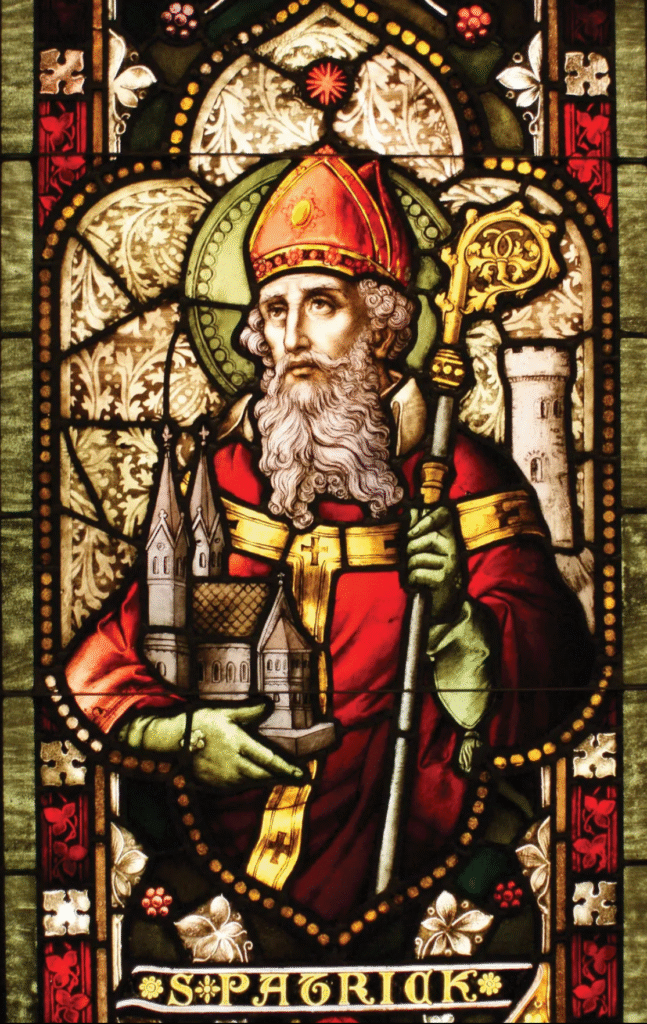
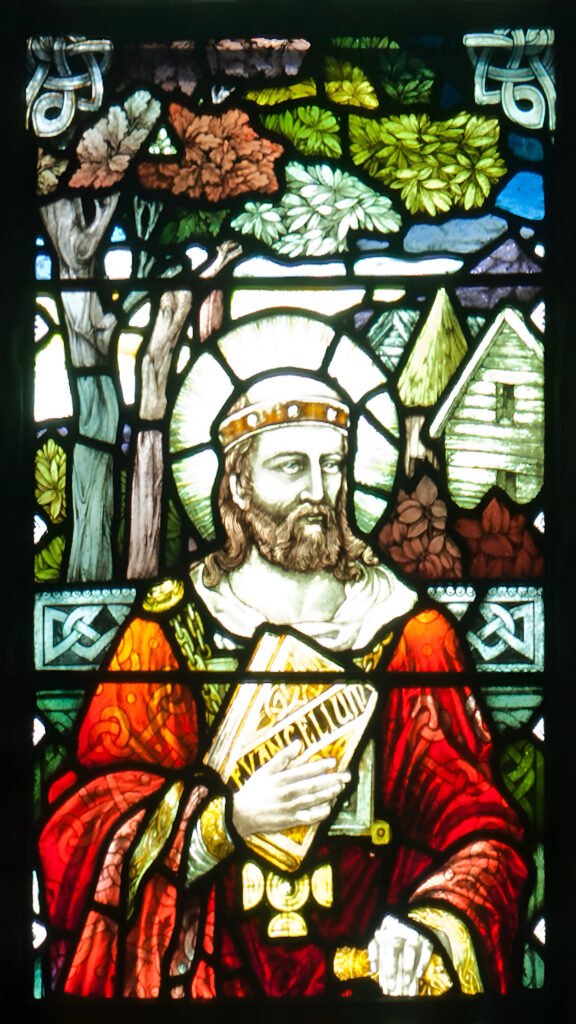
Our holy father Finnian of Movilla was an Irish missionary, born around the year 495. He is sometimes known by the epithet Finbarr, meaning “white head,” a nod to his distinctive white hair. Not to be confused with his namesake, St. Finnian of Clonard, he received instruction from venerable teachers such as Colman of Dromore and Mochaoi of Nendrum. His path of learning eventually led him to the renowned monastic school at Candida Casa, and later, he journeyed to Rome to deepen his spiritual and theological understanding.
Even The Saints Make Errors
It is a testament to the humanity even of the saints that they may experience moments of imperfection. While sojourning at Candida Casa in Southern Scotland, a land then dominated by the Picts, an incident occurred involving the princess Drustice, daughter of a Pictish king. The princess was staying in the women’s quarters of the monastery at the time. Though the precise nature of the playful act, a prank, remains unknown to us, it is recorded that had St. Finnian not possessed considerable connections, this event might well have hindered his future service to the Church.
Nevertheless, by God’s grace, he was able to continue his path. He traveled to Rome, and after some years, he was ordained to the holy priesthood. Returning to Ireland, he brought with him a priceless treasure: a copy of St. Jerome’s Vulgate translation of the Holy Scriptures. In that age when books were exceedingly rare, this sacred text brought immense honour and spiritual wealth to the monastery he was destined to establish.
Founding His Famous Monastery
In the year 540, St. Finnian founded his monastery in Movilla, located in County Down. The site chosen was one previously held sacred by the local pagan peoples, and the venerable ruins of the abbey church still stand today, a silent witness to centuries of prayer and devotion. With the support of the king of the Dál Fiatach, a ruling family of that northern land, the monastery grew swiftly. Movilla became a vital centre of spiritual life, learning, missionary endeavour, and even commerce, a beacon of Celtic Christianity.
By the time of his repose in the Lord around the year 579, Movilla Abbey was already widely recognised as a foundational pillar of monasticism in Ireland. It endured for over a thousand years, a spiritual stronghold, until its tragic dissolution in 1542. The Dissolution of the Monasteries was a legal decree enacted by Henry VIII of England, which led to the closure of all Catholic (by the time of the act but originally Orthodox) monasteries in Ireland, England, and Wales. Their wealth was seized, their properties dispersed, their sacred buildings often demolished, holy relics destroyed, and precious libraries laid waste.
A Terrible Irony for The Irish
It is a point of historical irony, understood from an Orthodox perspective, that Ireland had been forcibly brought under the authority of the Pope of Rome in 1059. At that time, Rome was under the influence of an English pope. This pope, along with Henry II, orchestrated an invasion of Ireland, threatening further violence and destruction unless the people submitted to Roman jurisdiction, which they reluctantly did. It was through this act of conquest and coercion that Ireland became subject to the See of Rome.
However, as history records, Henry VIII later broke with Rome and established the Church of England. Subsequently, because the Irish people did not submit to the new ecclesiastical demands emanating from England a second time, they were subjected to renewed waves of destruction and violence. This painful pattern continued throughout 800 years of occupation.
To this very day, much of Ireland remains under the jurisdiction of Rome, and sadly, many people are unaware that the holy saints they venerate are, in fact, the saints of the ancient, undivided Church – Orthodox saints – who lived and reposed long before the Great Schism and were never subject to the authority of the Pope of Rome in the way that later became defined.
His Famous Student – Colmcille (Columba)
Among St. Finnian’s most renowned students was the great enlightener, St. Columba. St. Columba served as a deacon under St. Finnian before embarking on his own missionary journey to the island of Iona. It was during his time serving with St. Finnian that St. Columba performed his first recorded miracle. Echoing the first miracle of our Lord Jesus Christ at the wedding in Cana, he transformed water drawn from a local well into wine when the church found itself without wine for the divine services.
Legacy
Among the notable contributions attributed to St. Finnian of Movilla is a significant sixth-century text known as the Penitential. While its authorship is sometimes erroneously ascribed also to St. Finnian of Clonard, this collection of fifty canons, intended for guiding the spiritual discipline of both clergy and laity, is a foundational work of its kind. Within its pages are outlined penances for various transgressions, with stricter measures appointed for those in holy orders, reflecting the higher calling and responsibility of the clergy. This work, drawing upon Holy Scripture and the wisdom of earlier spiritual fathers, stands as one of the earliest known penitentials, offering valuable insight into the practices of repentance and reconciliation within the early Church in Ireland.
Beyond these significant events – his studies, the founding of Movilla, his bringing of the Vulgate, and his tutelage of St. Columba – not a great deal more is precisely known about the life of our Holy Father Finnian, including the exact circumstances of his peaceful repose around the year 579. Yet, his spiritual legacy endures through the centuries.