Who is St. Felim?
Felim – 22nd August
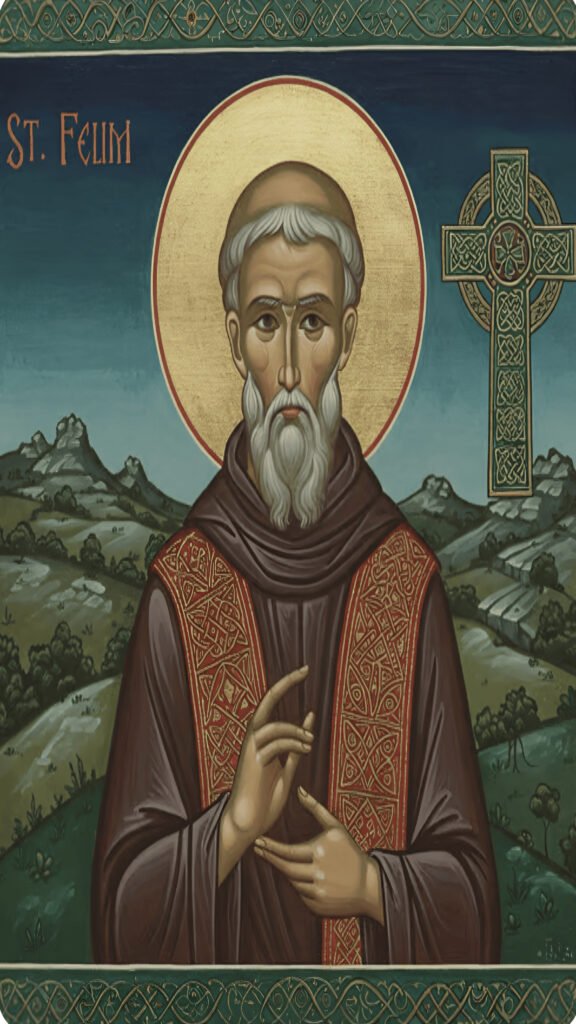
Saint Felim was an Irish hermit monk born shortly after 500 AD. He was a descendant of Eógan mac Néill, son of Niall of the Nine Hostages. If you have read our Life of St. Patrick, you will know that the mac Néill clan was divided regarding Christianity, with Eógan being on Patrick’s side. His branch of the family went on to build several monasteries and churches. Therefore, Felim came from noble stock who, for generations, had contributed to the Lord’s work in Ireland.
His mother was a descendant of Dubthach maccu Lugair, who was Ard-Ollamh of Ireland (an Ollam was a poet or bard of literature and history) under King Lóegaire mac Néill. This is the same Lóegaire mac Néill that started a battle with his army and druids against St. Patrick in which he lost. After this battle, Lóegaire mac Néill was cursed by Patrick telling him none of his descendants would ever sit on the throne again.
Death to This World
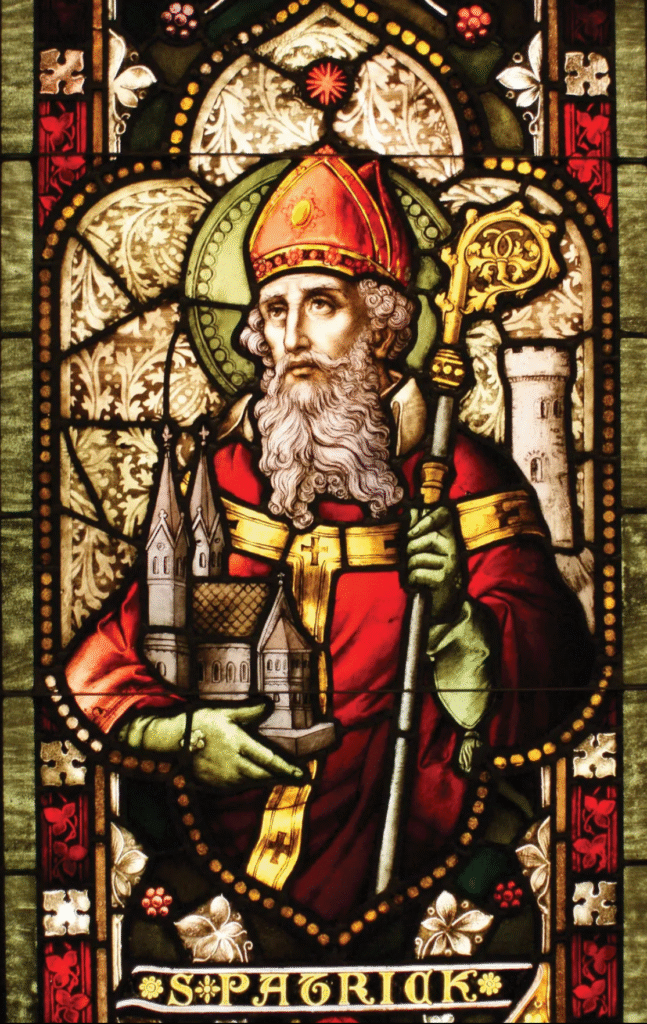
It is rather interesting that Dubthach maccu Lugair embraced St. Patrick and Christianity immediately upon meeting Patrick, even risking the wrath of the king. So strong was his faith that he was blessed by Patrick himself. Shortly after this, his youthful poet Fiacc also converted and eventually became a Bishop.
Therefore, it was always likely that Felim would embrace Christianity. However, he wasn’t content with simply living a Christian life; he wanted to die to this world and live only in Christ. To this end, he became a monk in Slanore monastery in County Cavan, eventually becoming the first known Bishop of Kilmore. Little is known about his life beyond these details. However, his name is still well known in Ireland, with children bearing his name or a variation thereof until only a couple of generations ago.
We do know that he had a brother and sister: St. Diarmait and St. Femia. Diarmait went on to found a monastery at Loch Ree, on the River Shannon near Athlone.
It is also known that toward the end of his life, he chose to become a recluse, spending his days as a hermit in prayer. The location of his hermitage has been lost to time. But for his memory to live on for so long, he clearly had an impact on his flock and on Irish Christianity. In Ireland, oral tradition is still quite common to this day. I have no doubt that if a person went to Kilmore Diocese in County Cavan, they would find someone who knew a few stories about St. Felim.